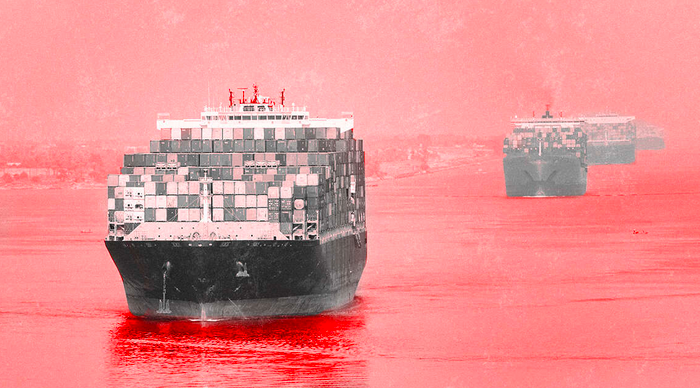
On Day 4 of the US/Israel war against Iran, I shared comments with Jennifer George for Fast Company Middle East on “The $20 million-barrel question: How port disruption and risk at Hormuz affect global trade“.
Discussing the impact on the regional & world economy of prolonged disruptions in the Strait of Hormuz, I stated that “Governments and multinational firms are moving away from treating geopolitical risk as an abstract premium and are instead embedding it as a core, fixed operational cost”, with many corporates shifting “from lean, just-in-time logistics to just-in-case approaches“.
In an effort to build resilience, I commented that “Gulf states are pursuing a careful diplomatic balance, maintaining security partnerships with the United States while preserving economic and diplomatic channels with China and Russia so that non-energy trade, such as food, medicine and other essential goods, remains insulated from geopolitical spillover. This is not merely reactive crisis management; it is systemic hedging.“
About insurance itself becoming a strategy, I added that “large firms are turning to captive insurance structures or even sovereign guarantees to keep trade lanes operational when private insurers hesitate.“
But the threat is not limited to Hormuz. I went on to describe the Hormuz/Red Sea “double-chokepoint trap”, and highlighted that the risk for the world economy is ernergy quantity, not merely price. “The biggest risk for the world economy is not so much the price of the crude oil barrel, as it is the absence of energy to power Asia’s industrial powerhouse”, with India, China, South Korea and Japan most at risk.
Finally, “The Gulf is also a significant exporter of fertilisers, including urea and ammonia. Energy constraints or export bottlenecks could therefore affect agriculture and trigger secondary food price pressures over subsequent months. In this context, a prolonged closure of the Strait of Hormuz would be an event that could precipitate a synchronized global recession, not solely because of volatility, but also because of systemic constraints.“
Read the full article here.
Picture credits: Krishna Prasad / Fast Company Middle East




Be First to Comment