As Brussels debates the Industrial Acceleration Act (IAA) and tightens local-content rules under “Made in Europe,” a concerning blind spot has emerged: Türkiye.
Despite a three-decade Customs Union and being an integral part of European automotive, aerospace, and machinery supply chains, Türkiye risks finding itself on the outside of EU public procurement preferences and clean-tech subsidies.
If you ask us, European industry treating Türkiye as a third-party bystander rather than a core nearshore partner is a strategic miscalculation. But for Turkish industry, it raises an existential question: Is a “Go East” strategy no longer just an alternative, but an imperative?
Enter the final stages of the Japan-Türkiye Economic Partnership Agreement (EPA). The timing could not be more critical…
While Brussels looks inward, Tokyo is looking to diversify:
📍 De-risking & Nearshoring: Japanese OEMs and Tier-1 suppliers urgently need high-grade, cost-competitive manufacturing hubs outside East Asia to serve EMEA markets.
📍 Technology Meets Agility: Japan brings long-term capital, high-spec automation, and green transition technology (hydrogen, storage, grid). Türkiye brings scale, rapid execution, an agile workforce, and deep market reach into Europe, Central Asia, the Middle East, and North Africa.
📍 Joint Global Execution: Beyond mere bilateral trade, this is about Japanese balance sheets and engineering partnering with Turkish EPC contractors to rebuild critical infrastructure across the Global South.
For Türkiye, “Go East” doesn’t have to mean abandoning Europe. It means Turkish industrial leaders must stop operating as single-market price takers.
The Japan-Türkiye EPA offers a blueprint for how Ankara can re-anchor its industrial base: leveraging Japanese technology and capital to upgrade its manufacturing, while maintaining its position as the indispensable industrial crossroads between East and West.
Location, location, location… The geoeconomic map is being redrawn in real time. Capital will flow to whoever bridges the gap fastest.
How should Turkish manufacturing balance European regulatory pressures with East Asian strategic partnerships? With its industry, supply chains and geoeconomic intelligence expertise, Alagan Partners will take an active role in this discussion.
Join us in shaping the future of industrial resilience…
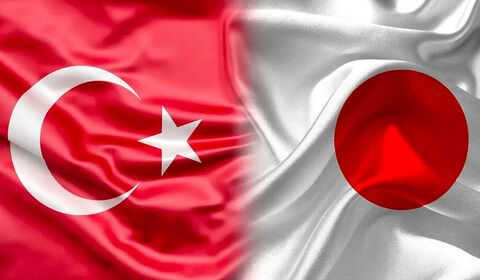
Is Europe closing the door on its nearshore manufacturing backbone? Why the Japan-Türkiye EPA would come at the right time
Published in Comments

Nicolas is a corporate geoeconomics and strategic & business intelligence expert with 25 years of experience in the Asia-Pacific, and more recently in the Gulf and Türkiye. A Managing Partner at Alagan Partners, he advises corporate executives on how to navigate the current geopolitical and geoeconomic environment, mitigate risk and develop prospective scenarios. He is also an Adjunct Professor & Guest Lecturer in geopolitics, geoeconomics and business intelligence at ESCP Business School (France), Galatasaray University (Türkiye), University Mohammed VI Polytechnic (Morocco), and Ecole de Guerre Economique (Paris School of Economic Warfare).
More from CommentsMore posts in Comments »
- The hidden macroeconomic war: how the Japanese Yen connects to US-Iran tensions
- The 2021 Myanmar coup: a Japanese tale of sorrow and sadness
- Lessons of Japanese justice from the casino bribery scandal and the Carlos Ghosn case
- Carlos Ghosn confirms Japanese economic warfare against France
- Russia as an influence proxy for China ?
- China showcases its own brand of authoritarian capitalism


Be First to Comment