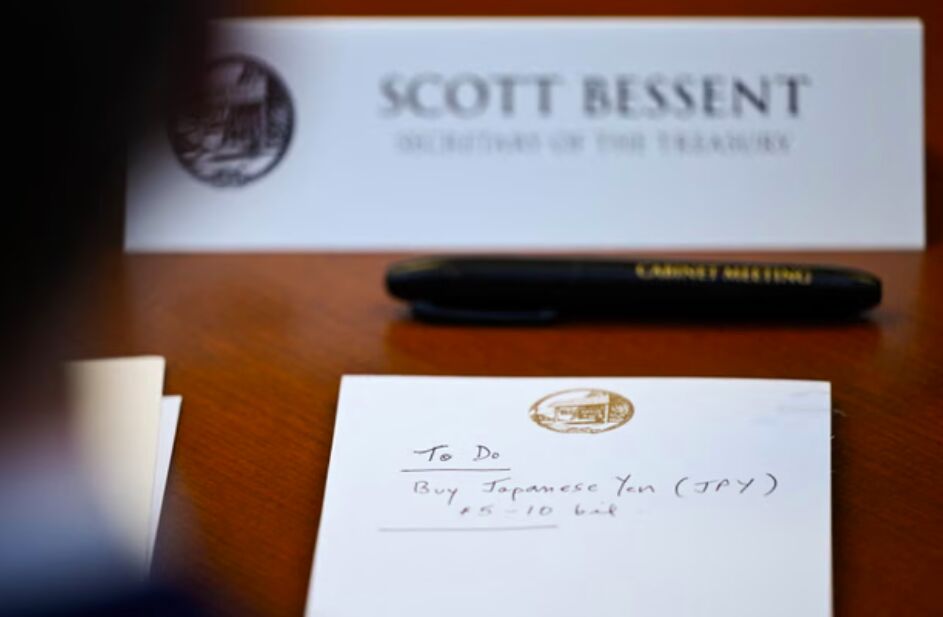
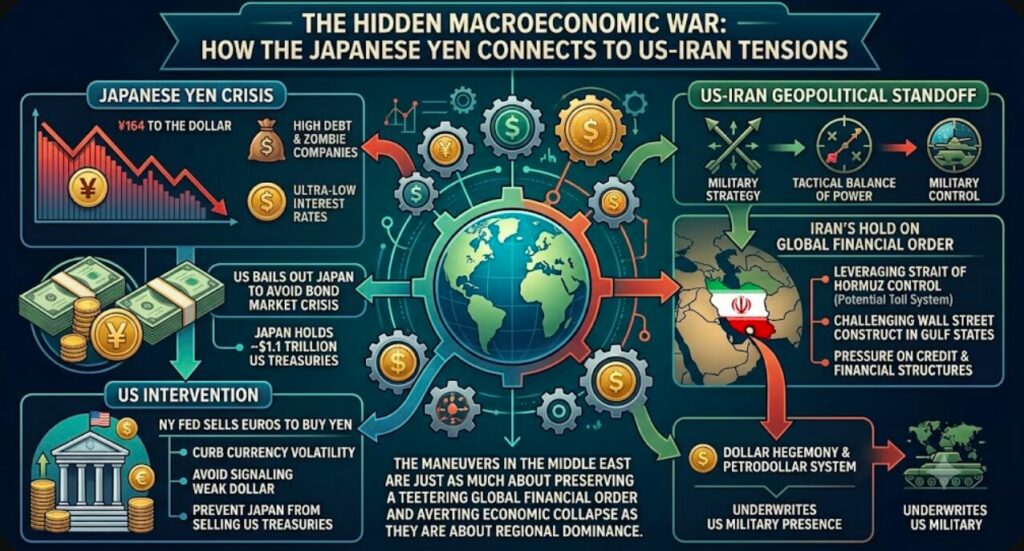
Looking at the geopolitical standoff between the US and Iran, it is easy to focus purely on military strategy, tactical balance of power and control over energy choke points. However, throw in some financial market action into the mix and it reveals how this conflict is intimately tied to a looming global financial crisis. Specifically, the US attempt to salvage the precipitously falling Japanese Yen…
📍 The US is quietly attempting to manage a massive bond market crisis by bailing out Japan. Japan is a critical pillar of the Western financial system, largely because it holds roughly $1.1 trillion in US Treasuries. For decades, Japan’s ultra-low interest rates provided “effortless profits” for Wall Street through cheap borrowing. Today, however, as interest rates rise, an estimated 14% of the Japanese economy is made up of “zombie companies” that can no longer cover their debts.
📍 To prevent a broader economic crash, Washington is currently engaged in complex financial maneuvers to prop up the Yen and protect the US dollar. In late July, the Yen had weakened to a 40-year low of nearly ¥164 to the dollar. On July 31, the US Treasury took the highly unusual step of selling Euros to buy Japanese Yen. Executed by the New York Fed, this coordinated intervention alongside Tokyo aimed to curb currency volatility. Crucially, the US chose to sell Euros rather than Dollars to avoid signaling a desire for a weaker US currency and to prevent Japan from having to sell off its massive US Treasury holdings to fund its own interventions, a move that would have spiked US borrowing costs.
📍 How does Iran fit into this fragile financial puzzle? The US administration’s ultimate priority is preserving the overarching economic system, specifically the petrodollar and dollar hegemony, which fundamentally underwrites America’s global military presence. Iran poses a direct threat to this architecture. By leveraging its control over the Strait of Hormuz (ongoing negotiations with Oman could soon lead to a formal bilateral control of the Strait, with a full-fledged toll system and freedom of passage conditioned by foreign policy choices) and challenging the financialized Wall Street construct established in the neighboring Gulf States, Iran is putting immense pressure on the very credit and financial structures that the US is desperately trying to protect.
⚠️ Ultimately, this reminds us that modern geopolitical conflicts cannot be understood in a vacuum. The US maneuvers in the Middle East are just as much about regional dominance as they are about preserving a teetering global financial order and averting an economic collapse at home.
Picture credits: Daniel Heuer for Reuters / Alagan Partners by Gemini






Be First to Comment